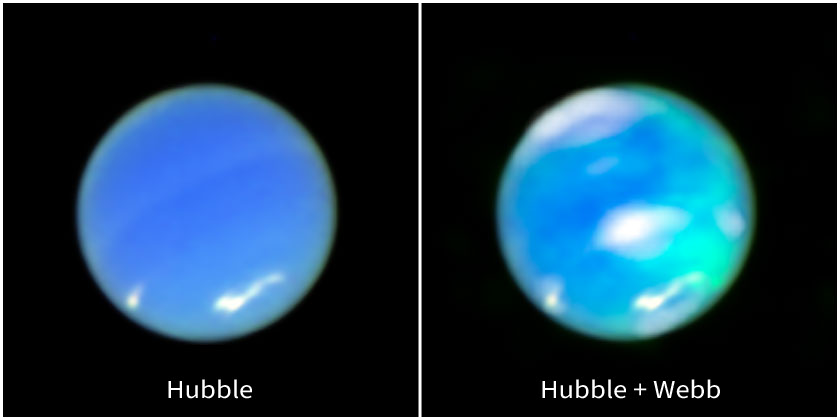
Webb's 2023 H3+ spectrum measured Neptune's upper atmosphere at 358 plus or minus 8 kelvin, far below Voyager 2's 1989 estimate, but two snapshots cannot yet explain what drove the change. The post When scientists announced Webb’s first definitive detection of Neptune’s auroras in March 2025, they revealed another surprise: observations taken in 2023 showed that the planet’s upper atmosphere had cooled by several hundred degrees since Voyager 2 visited in 1989—and scientists still don’t know exactly why. appeared first on Space Daily .
When scientists announced Webb’s first definitive detection of Neptune’s auroras in March 2025, they revealed another surprise: observations taken in 2023 showed that the planet’s upper atmosphere had cooled by several hundred degrees since Voyager 2 visited in 1989—and scientists still don’t know exactly why.